ClientElsewedy Industrial Development
CampaignToward a Better Industrial Future
Locations28

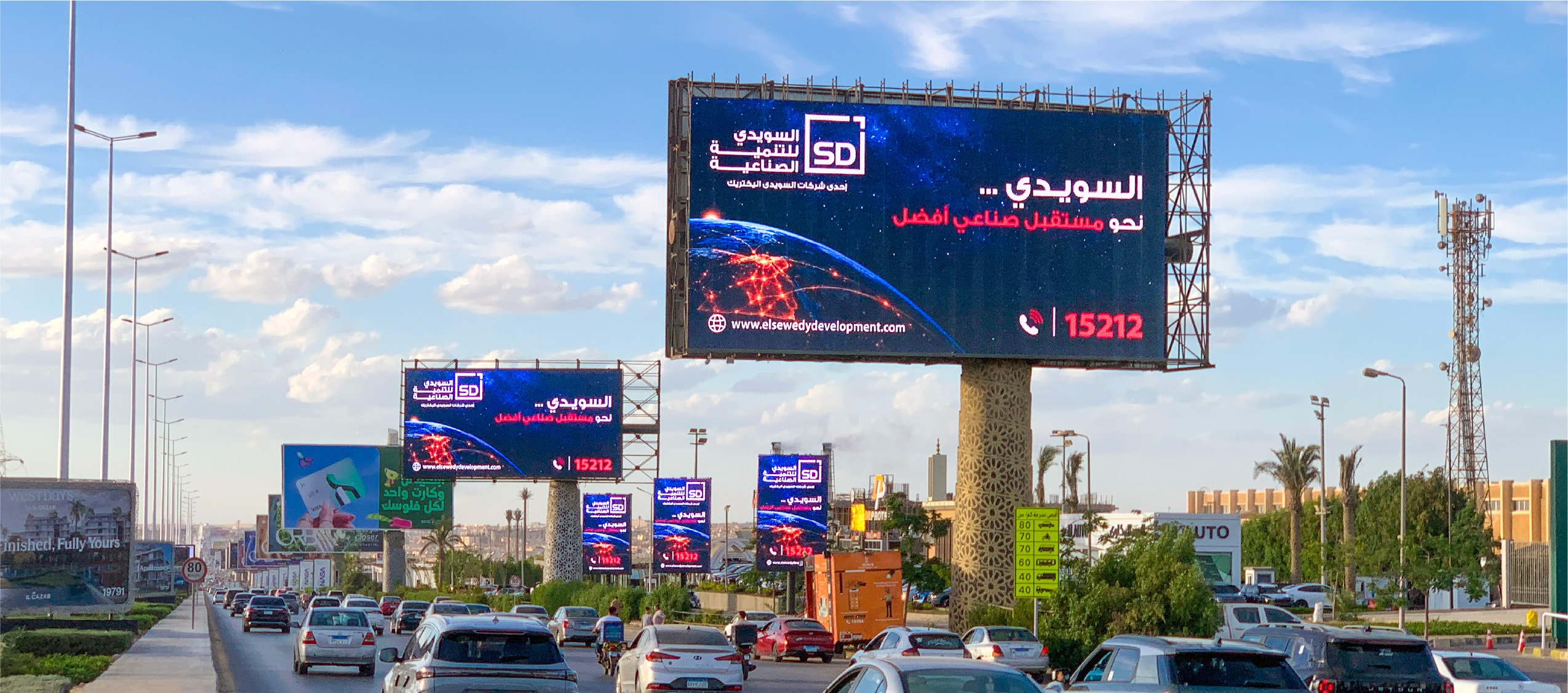
Elsewedy Industrial Development brought its industrial-development proposition to Egypt’s major routes through a coordinated static and digital Out-of-Home campaign. Built around the message “Toward a Better Industrial Future”, the rollout connected brand authority with the routes used by investors, industrial operators, business communities and regional decision-makers.
The objective was to reach business buyers through outdoor advertising and make the company visible and credible in the places where decision-makers move every day: Cairo, Alexandria and the arteries in between.
The campaign was planned like a map of the business world. Static sites kept the brand in view along the main roads, while digital screens added premium visibility in commercial and mixed-use areas. Together they presented Elsewedy Industrial Development as an active player in Egypt’s next stage of industrial growth.
B2B brands don’t convert at the billboard. They convert in the boardroom, weeks or months later. For Elsewedy Industrial Development, the OOH brief isn’t awareness or action — it’s recognition. The decision-makers who control land acquisitions, factory builds, logistics networks, investment flows and supply-chain strategy don’t respond to a single exposure. They respond to a name they have seen enough times to trust. By the time the conversation starts, the campaign has already done the work.
01 / 26 of July Axis – Ahmed Orabi Axis
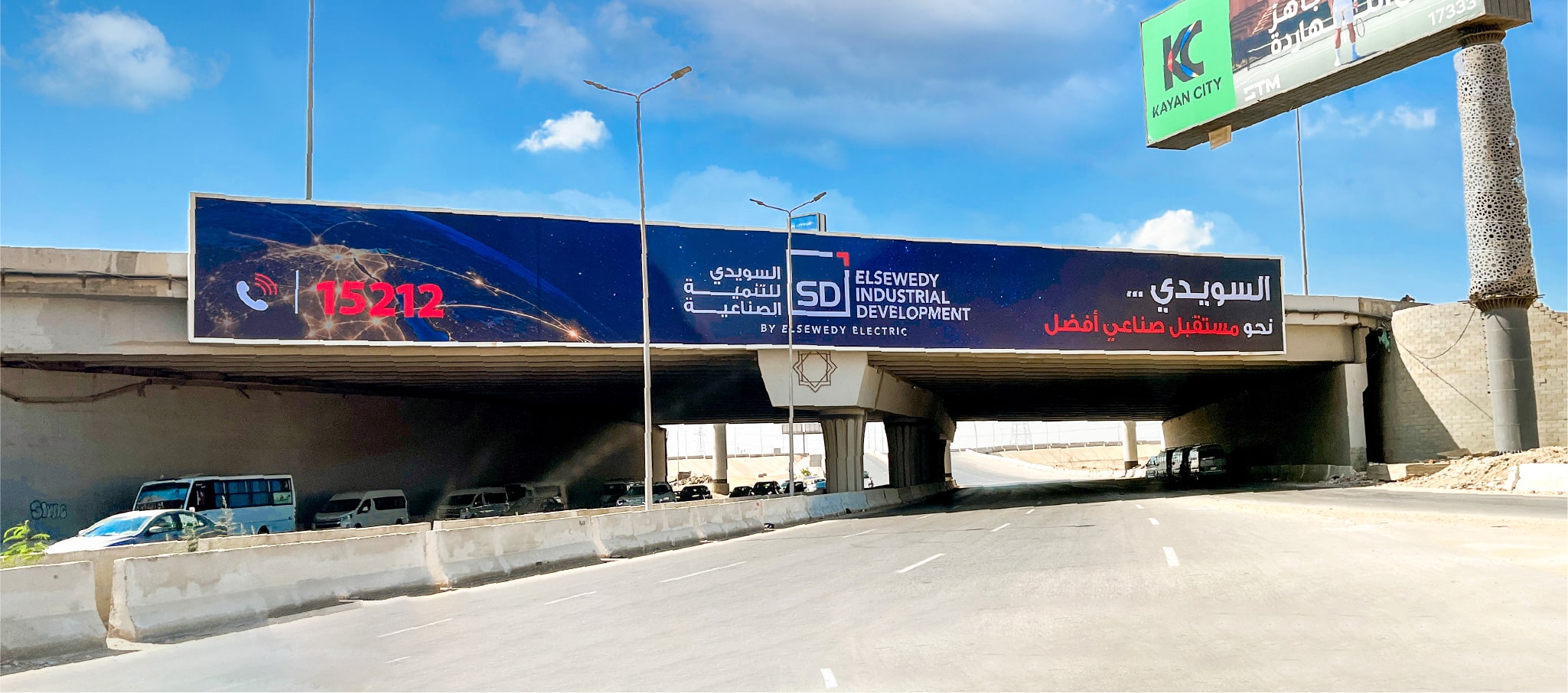
The media architecture followed three layers: corridor dominance for scale, city-node visibility for repeated recognition, and regional routes for market continuity. Together they gave the campaign a connected footprint across Greater Cairo, Alexandria and the industrially relevant travel corridors.
Static and digital coverage extended across the 26th of July Axis, Zayed entrances and exits, Hyper One, Arkan Plaza, Royal City, North Dahshur, South Dahshur, Wahat Road, the Ring Road, Lebanon Square, October Bridge and the Cairo–Alexandria Desert Road. Together, these placements connected established Cairo traffic with Sheikh Zayed, 6th of October, the wider western catchment and the routes leading toward Alexandria.
Coverage across Salah Salem, Tahrir Square, October Bridge and Zamalek brought the campaign into Cairo’s densest daily movement corridors, maintaining consistent brand visibility across key commuter, commercial and business routes.
Dynamic visibility at City Stars, O1, Waterway and New Cairo, supported by coverage along Sokhna Road, Suez Road and the Suez entrance, created a contemporary, high-authority environment for the corporate proposition and connected the campaign with premium commercial and business districts. This eastern network was particularly relevant for decision-makers travelling between corporate offices, investment destinations, industrial zones and emerging urban developments.
The rollout extended beyond Greater Cairo to Borg El Arab, Loran Corniche, Smouha, Carrefour and the Suez Canal corridor, with additional visibility along the Cairo–Alexandria route. This connected the brand with industrial, logistics and investment movement beyond the capital and strengthened Elsewedy Industrial Development’s national positioning as a connected industrial-development platform.
02 / WaterWay Digital Board
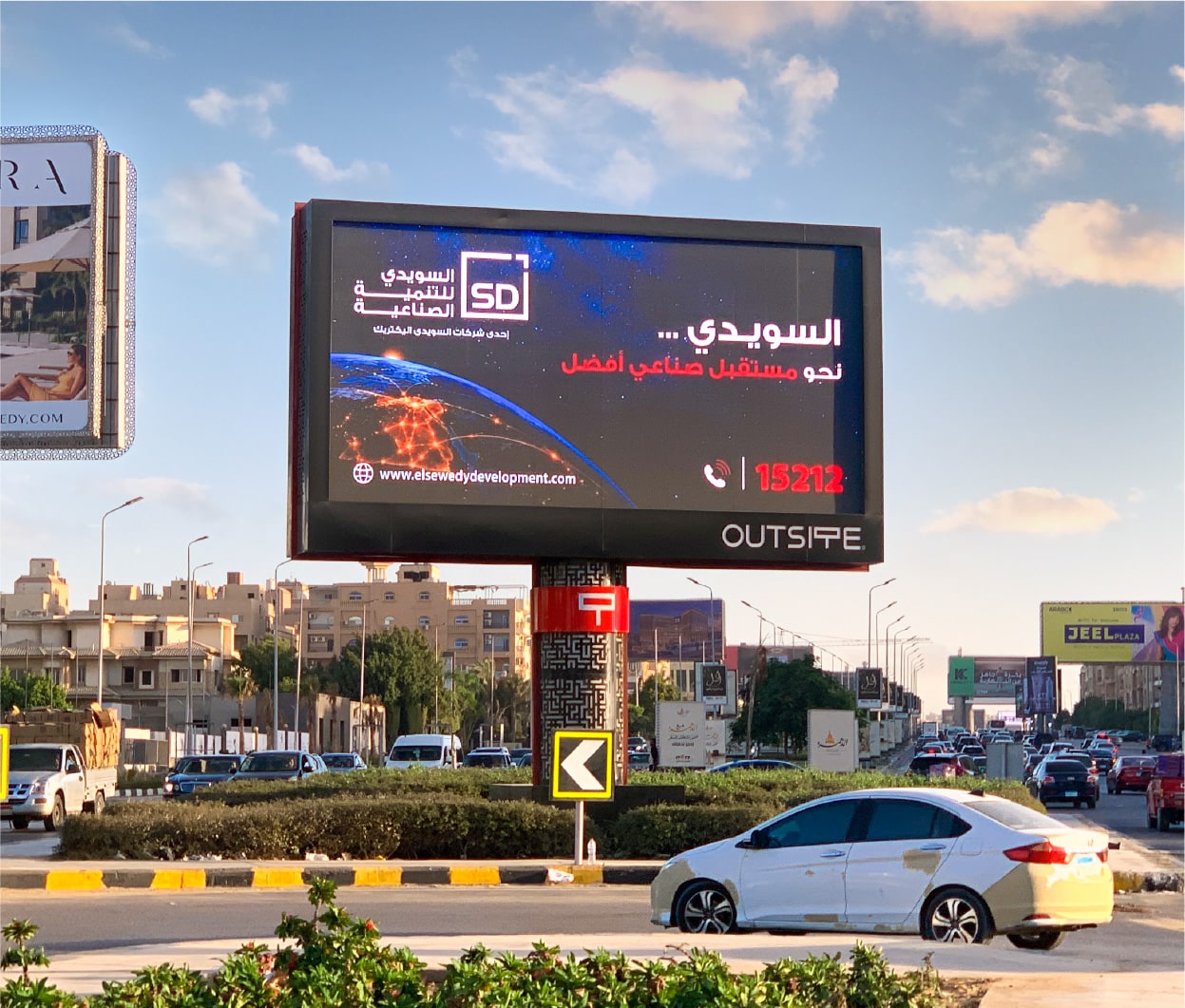
03 / October Digital Board
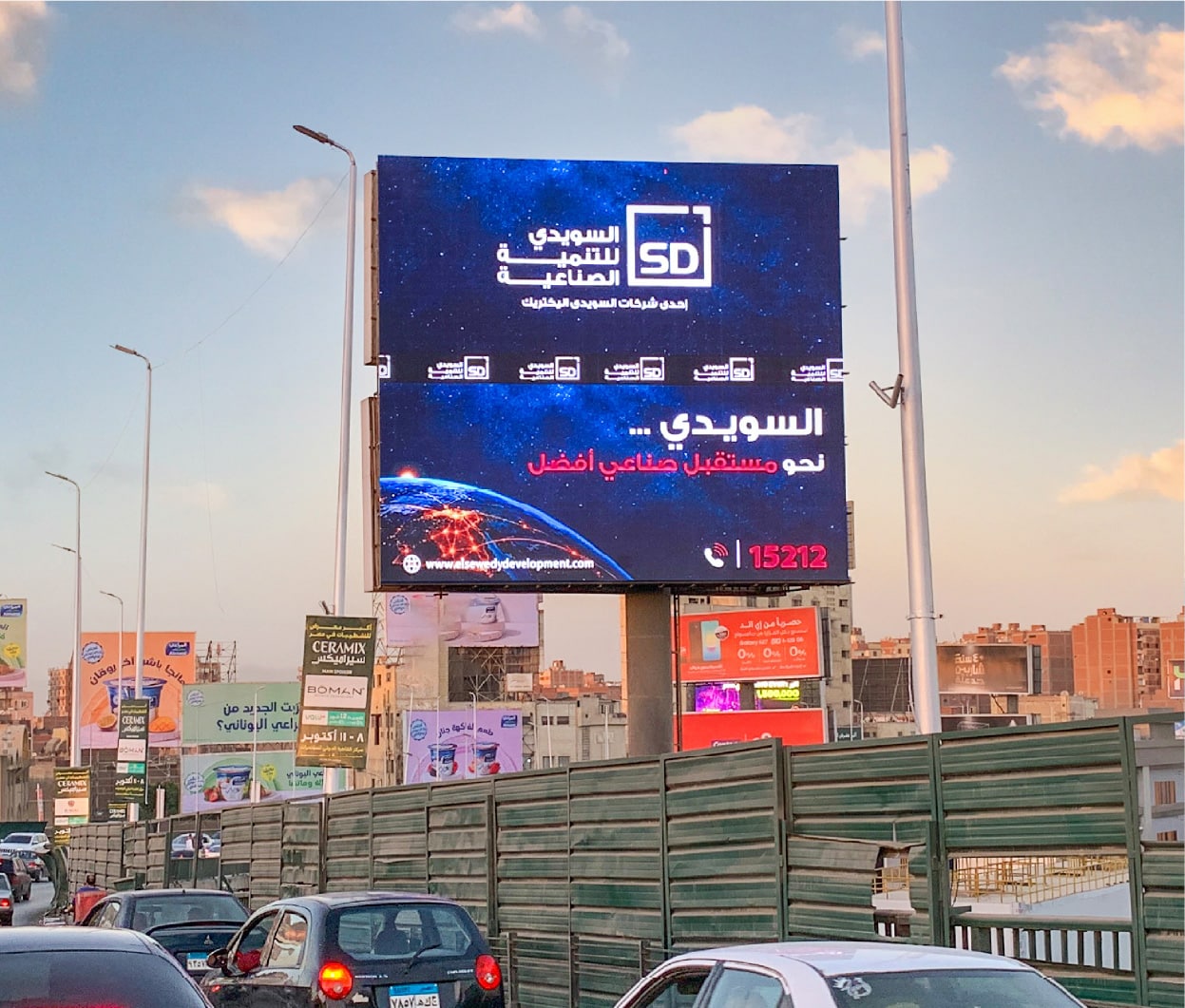
04 / El Wahat Road Dream Land
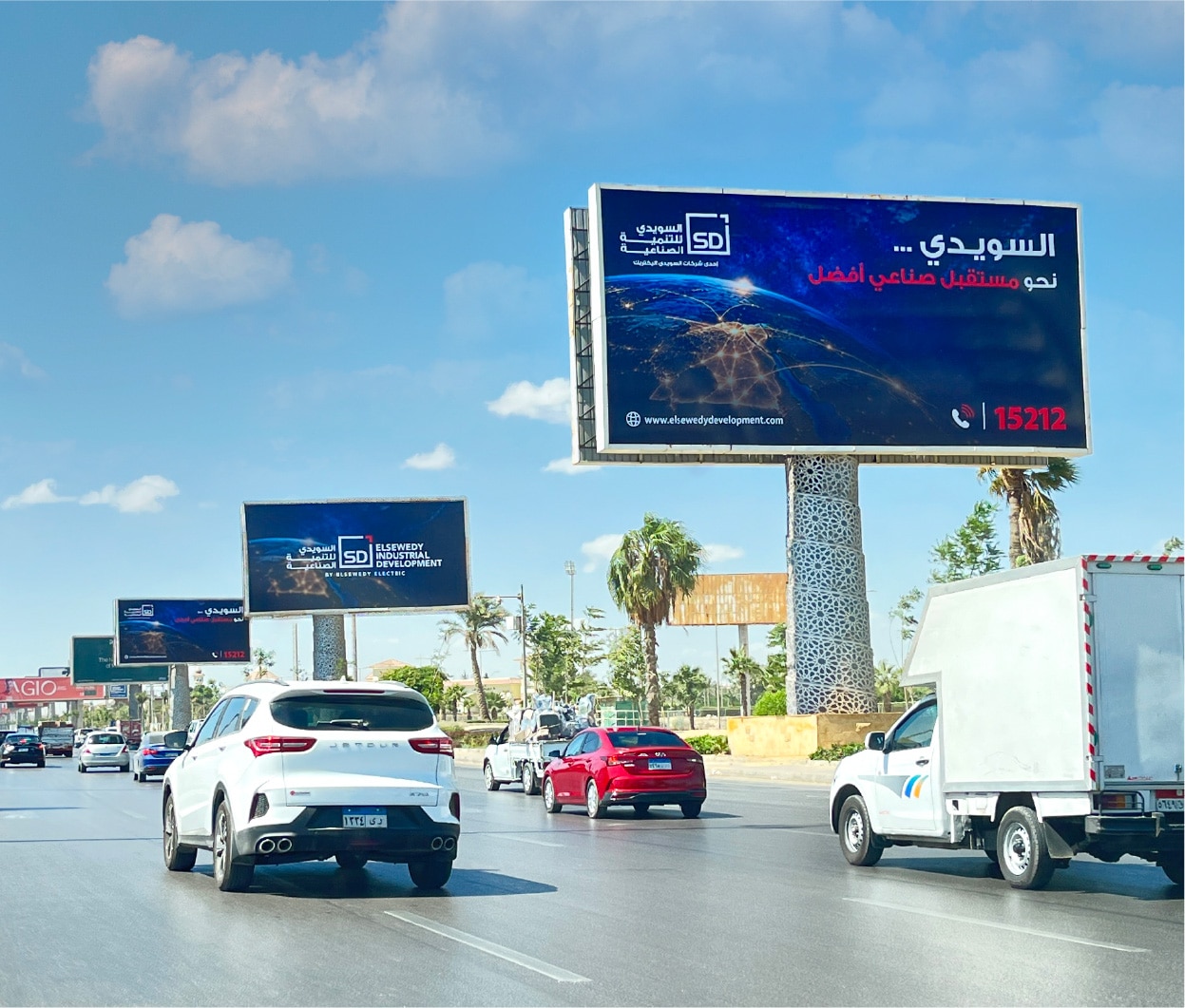
05 / Cairo Alex Desert Road Sheikh Zayed City
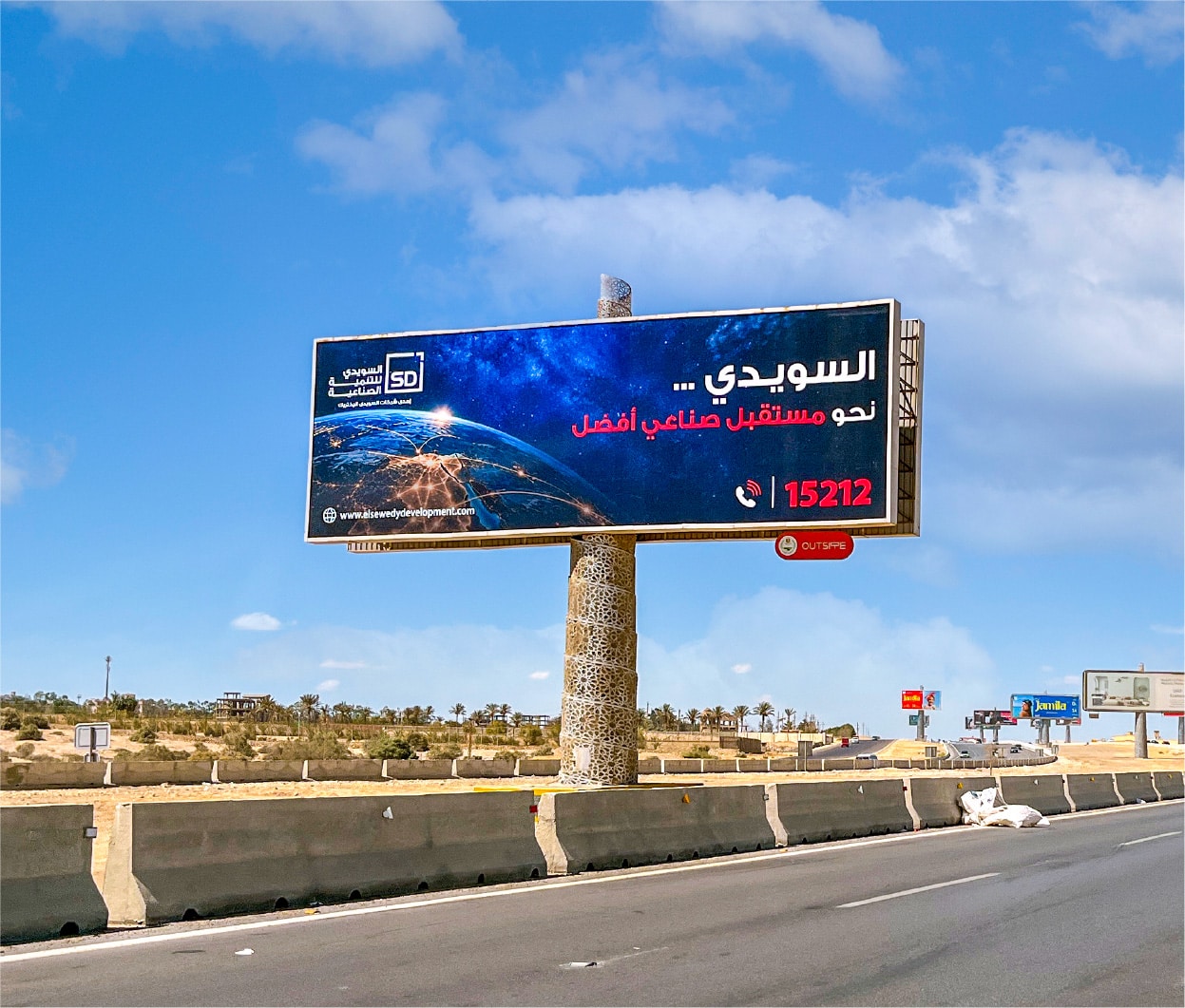
The allocation is strategically complementary: static inventory supplies continuity and geographic scale, while digital inventory supplies flexibility, salience and a stronger premium signal.
The campaign used a clear corporate visual system across static billboards and digital screens. The Elsewedy Industrial Development identity was paired with a concise Arabic promise and a direct contact route. The design prioritized readability at speed — high contrast, limited copy and a strong brand block — for an audience that may be driving, moving between meetings or encountering the message for only a few seconds.
Digital placements added flexibility for message sequencing, while static assets created an enduring industrial footprint. The combined system gave the campaign corporate authority alongside practical route-level presence.
The campaign works as an account-awareness layer for a complex B2B sales journey. Priority audiences include industrial investors, developers, manufacturers, logistics and warehousing operators, business owners, infrastructure partners, supply-chain stakeholders and public-sector or institutional decision-makers. These segments are strategic planning inferences drawn from the campaign category and route selection, not measured audience results.