ClientIQ Store
CampaignTriple Zero Mobile Financing
Locations8+

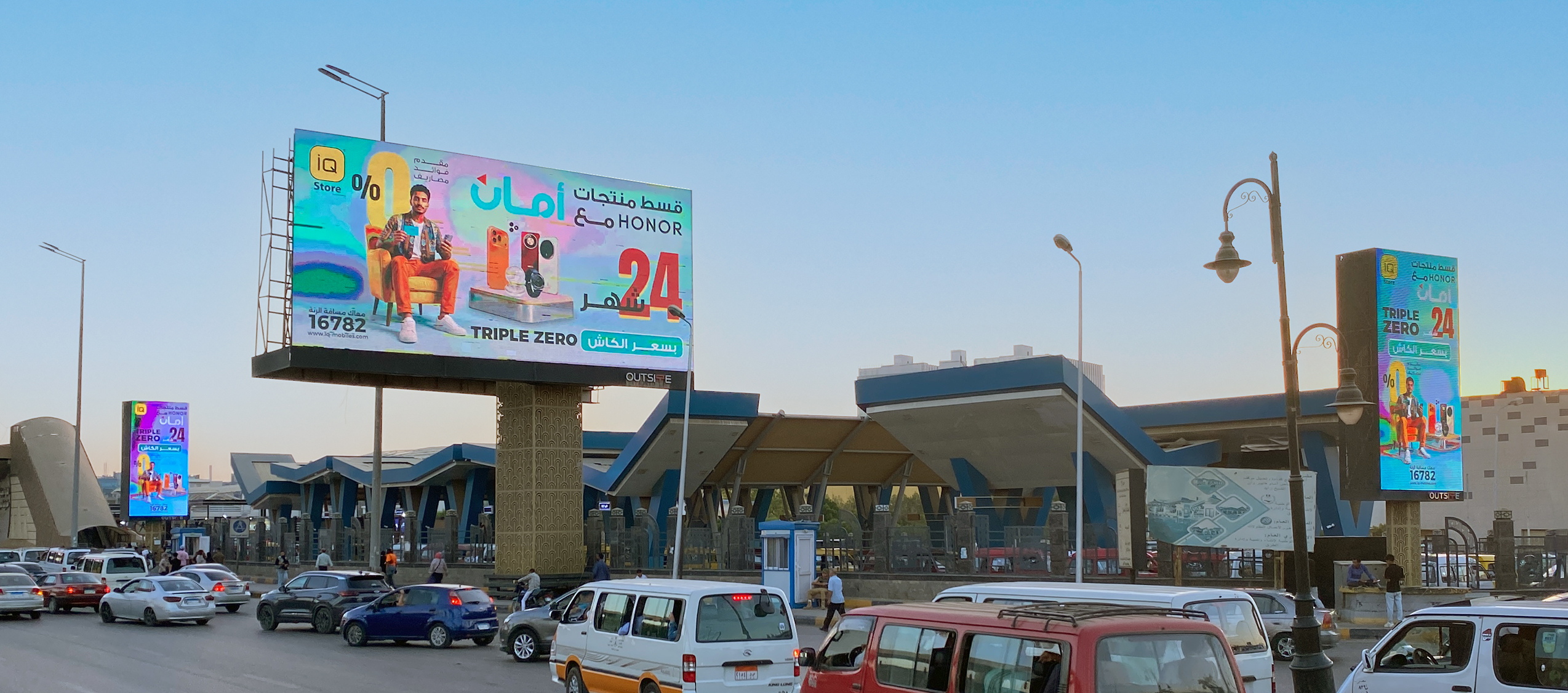
IQ Store launched a targeted Out-of-Home campaign to make upcoming mobile devices easier to access through integrated financing facilities.
The campaign connected brand awareness with immediate purchase consideration, allowing passers-by to move from seeing the offer to exploring a direct route towards device ownership. By placing financing information within the outdoor creative, IQ Store addressed one of the key barriers in mobile purchasing: affordability and payment flexibility.
The vision was to make the offer simple, visible and commercially relevant within everyday movement.
01 / Lebanon Digital Board
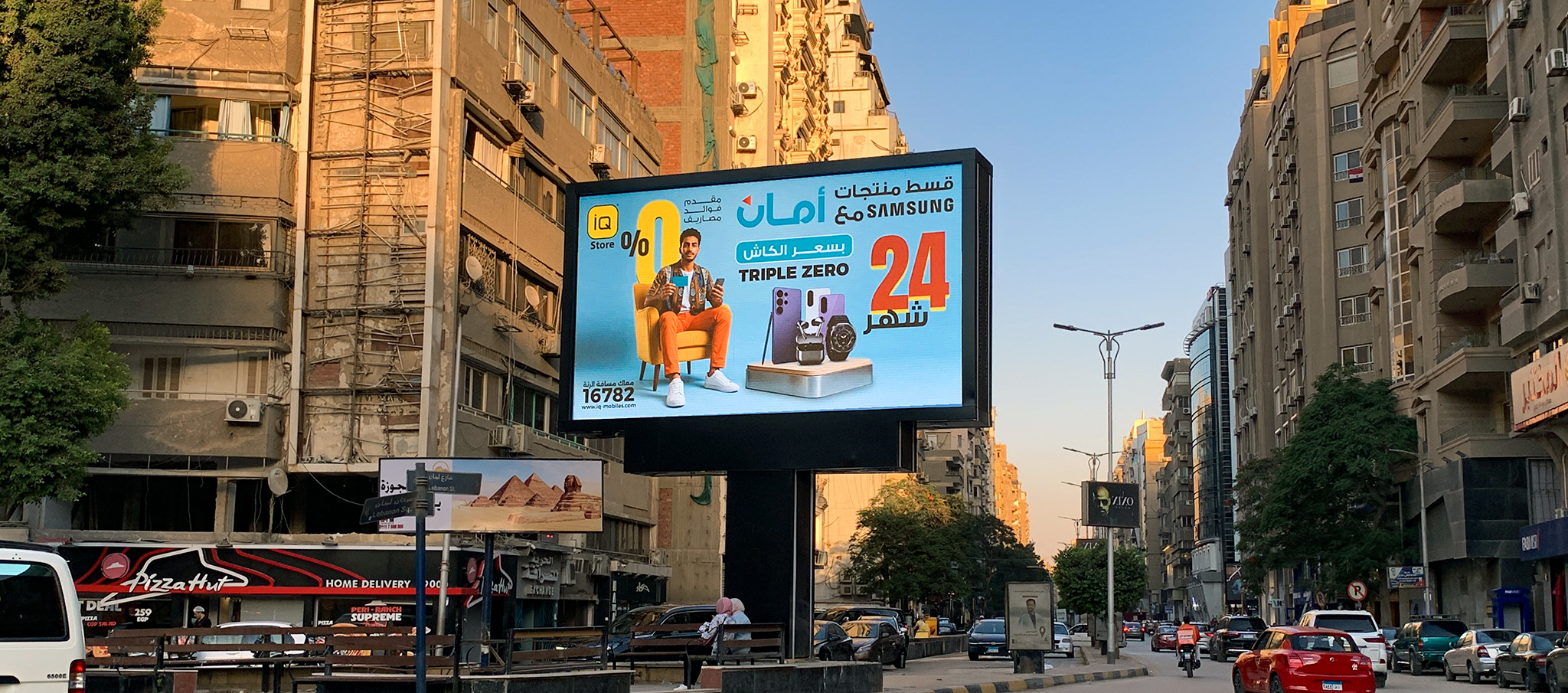
The campaign focused on high-foot-traffic zones where consumers are likely to encounter mobile retail, technology and purchase-led messaging. A connected digital and static network maintained visibility across heavily trafficked roadways: digital screens delivered the offer in dynamic formats, while static billboards extended the message through consistent roadside branding. The location strategy placed IQ Store’s financing proposition within frequent daily journeys, supporting repeated exposure and strengthening consideration among potential smartphone buyers.
Digital placements at Hyper Digital Board, Lebanon, Zamalek and Mohie El Din Digital Board introduced the campaign to major retail and leisure destinations. Traditional billboards and screens along the 6th of October corridor extended the brand presence across key commuter routes linking residential areas.
The campaign also reached high-footfall destinations at Orouba Digital Board, Al Moshier Tantawy Axis, Abd El Moneam Riad and the Fifth Settlement over the WaterWay screens.
02 / Lebanon Digital Board
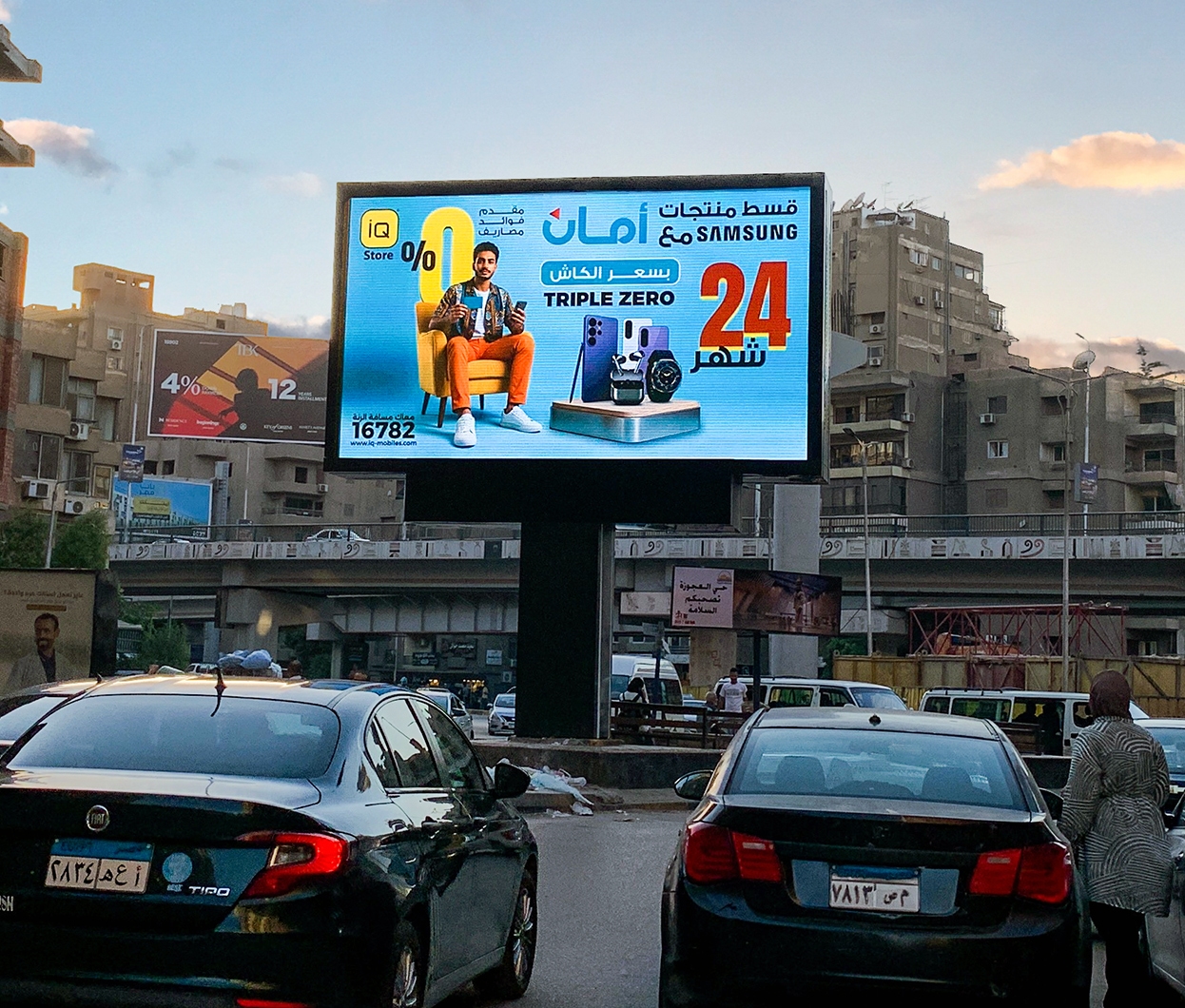
03 / October Digital Board
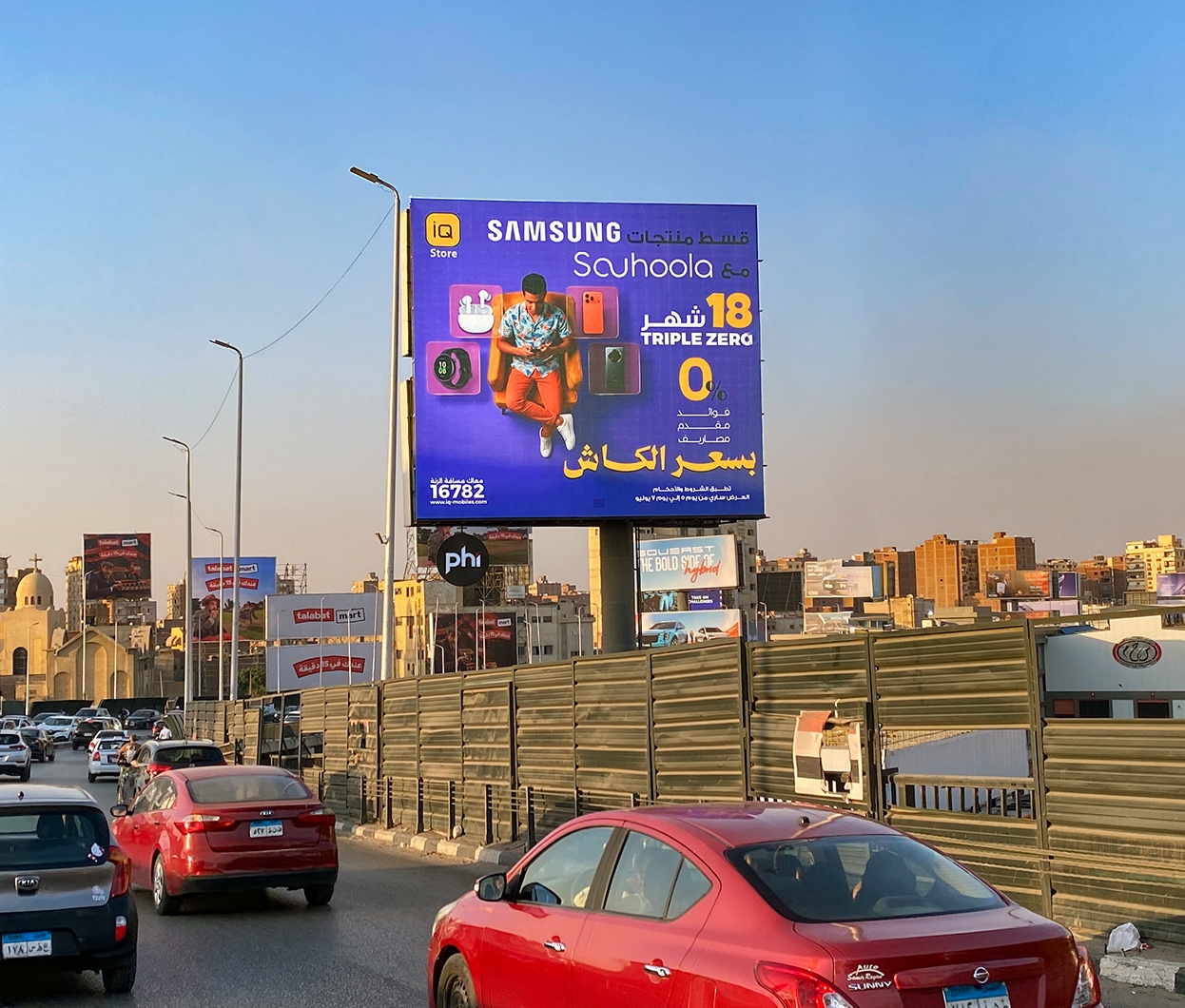
The campaign used a dual-media strategy combining interactive digital screens with static billboards. Digital screens presented the upfront offer and financing proposition in a clear, high-impact format, helping passers-by understand the opportunity quickly. Static billboards reinforced the message with consistent communication around financing facilities and purchase accessibility.
Together, the two formats created a practical media system: digital placements introduced the offer dynamically, while static placements sustained recognition and kept the financing message visible across the OOH landscape.
The campaign was designed to: